
Exam preparation for children: breaks, time, play, revision and familyबच्चों की परीक्षा की तैयारी: ब्रेक, समय, खेल, रिवीजन और परिवार
Whether your child is preparing for school exams, an entrance test or a competition, the aim is steady, rested work over many weeks, not long hours at the last minute. This guide is for children aged about 10 to 18 and their parents.चाहे आपका बच्चा स्कूल की परीक्षा, किसी प्रवेश परीक्षा या प्रतियोगिता की तैयारी कर रहा हो, लक्ष्य है हफ़्तों तक लगातार और आराम के साथ पढ़ाई, आख़िरी समय में देर रात तक जागना नहीं। यह गाइड लगभग 10 से 18 साल के बच्चों और उनके माता-पिता के लिए है।
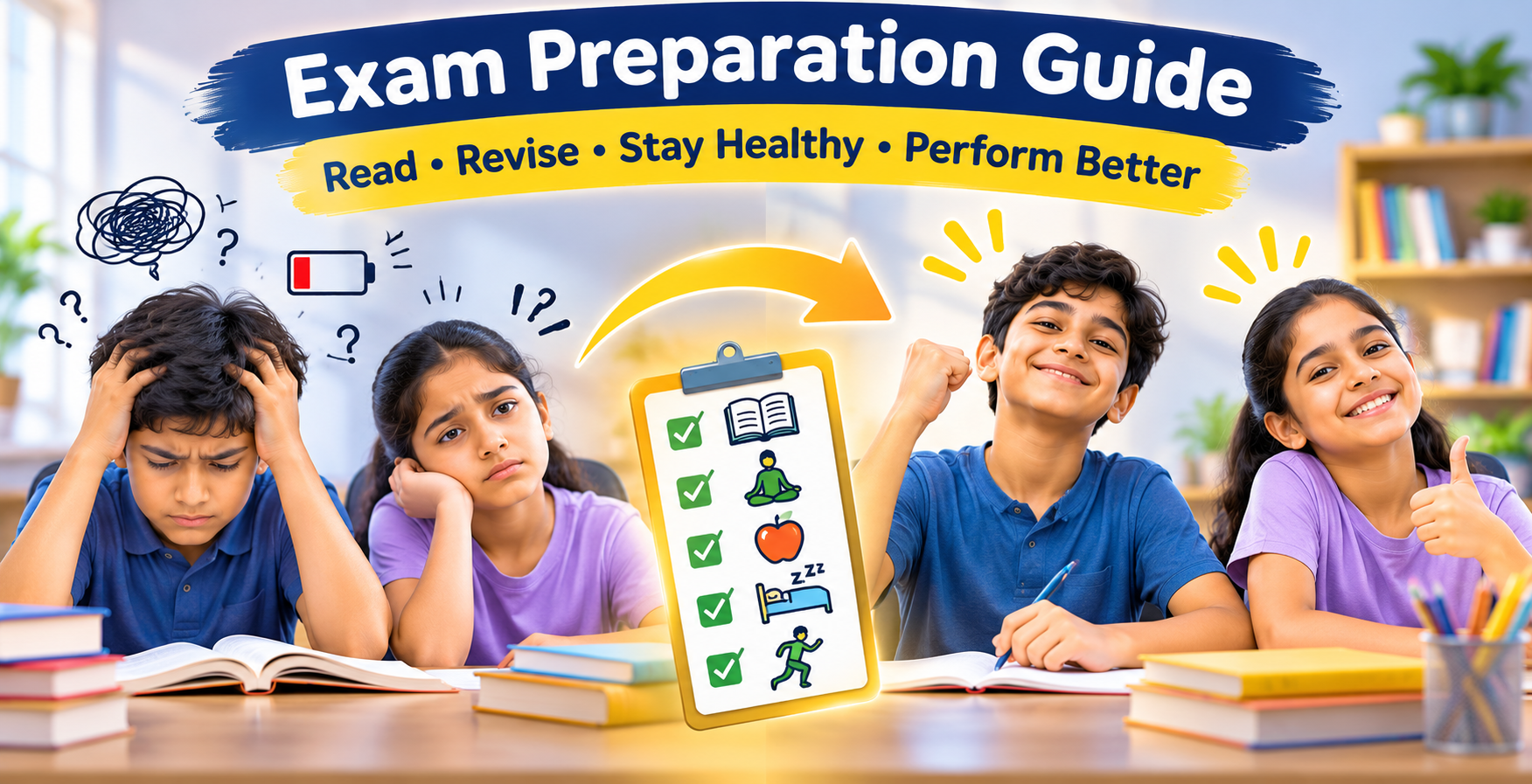
- Plan the month and the week, then study in blocks with short breaks.महीने और हफ़्ते की योजना बनाएँ, फिर छोटे ब्रेक के साथ ब्लॉक में पढ़ें।
- Move the body every day. Desk yoga helps in long study sessions.रोज़ शरीर को चलाएँ। लंबी पढ़ाई में डेस्क योगा मदद करता है।
- Play, family time and sleep are part of preparation, not a waste of time.खेल, परिवार का साथ और नींद भी तैयारी का हिस्सा हैं, समय की बर्बादी नहीं।
- Revise often, and write short, clear notes.बार-बार रिवीजन करें, और छोटे, साफ़ नोट्स बनाएँ।
- No energy drinks for children or teenagers.बच्चों और किशोरों को एनर्जी ड्रिंक न दें।
1Plan the months, then the weekमहीनों, फिर हफ़्ते की योजना
Long-term planलंबी अवधि की योजना
- Write the exam or competition date on a calendar. Count back the weeks.परीक्षा या प्रतियोगिता की तारीख कैलेंडर पर लिखें। उससे हफ़्ते पीछे गिनें।
- Divide the syllabus into parts: for example, 2 chapters a week, with the last 3 weeks kept for revision and practice papers.सिलेबस को हिस्सों में बाँटें: जैसे हर हफ़्ते 2 अध्याय, और आख़िरी 3 हफ़्ते रिवीजन और अभ्यास-पेपर के लिए।
- Keep one week in every four lighter. Use it to catch up on missed topics.हर चौथे हफ़्ते को थोड़ा हल्का रखें। उसमें छूटे विषय पूरे करें।
Weekly timetableसाप्ताहिक टाइमटेबल
- Fix the non-negotiable items first: school, coaching, meals, sleep and family time.पहले तय चीज़ें लिखें: स्कूल, कोचिंग, खाना, नींद और परिवार का समय।
- Then add study blocks, play and breaks in the gaps.फिर खाली समय में पढ़ाई के ब्लॉक, खेल और ब्रेक जोड़ें।
- Study the hardest subject when the child is most alert, usually in the morning or after a short rest.सबसे कठिन विषय तब पढ़ें जब बच्चा सबसे ज़्यादा चौकन्ना हो, आमतौर पर सुबह या थोड़े आराम के बाद।
- Keep one free slot every day. A plan that has no room for a bad day usually falls apart.रोज़ एक खाली समय रखें। जिस योजना में ख़राब दिन के लिए जगह न हो, वह अक्सर टूट जाती है।
2Study in blocks, with real breaksब्लॉक में पढ़ें, सच्चे ब्रेक के साथ
- A good starting pattern is 30 to 40 minutes of focused study, then a 5 to 10 minute break. For younger children, 20 to 25 minutes is enough. Adjust it to what works for your child.शुरुआत के लिए अच्छा तरीका है 30 से 40 मिनट की केंद्रित पढ़ाई, फिर 5 से 10 मिनट का ब्रेक। छोटे बच्चों के लिए 20 से 25 मिनट काफ़ी है। अपने बच्चे के हिसाब से बदलें।
- After 2 or 3 blocks, take a longer break of 20 to 30 minutes, with a snack and a walk.2 या 3 ब्लॉक के बाद 20 से 30 मिनट का लंबा ब्रेक लें, नाश्ते और थोड़ी सैर के साथ।
- Stop before the child is completely exhausted. Tired children remember less and make more careless mistakes.बच्चा पूरी तरह थकने से पहले पढ़ाई रोकें। थके बच्चे कम याद रखते हैं और ज़्यादा लापरवाह ग़लतियाँ करते हैं।

A break menu that refreshes the mindब्रेक के ऐसे काम जो मन को ताज़ा करें
- Drink water, wash the face, stretch (see desk yoga, section 3).पानी पिएँ, मुँह धोएँ, थोड़ा खिंचाव करें (डेस्क योगा, भाग 3 देखें)।
- Walk to the balcony or terrace for a few minutes, and look at distant things.कुछ मिनट बालकनी या छत तक चलें, और दूर की चीज़ें देखें।
- Have a light snack: fruit, roasted chana, a glass of milk or a sandwich.हल्का नाश्ता करें: फल, भुने चने, एक गिलास दूध या सैंडविच।
- Play a short game with family or friends (see section 4).परिवार या दोस्तों के साथ छोटा खेल खेलें (भाग 4 देखें)।
Breaks that do not helpऐसे ब्रेक जो मदद नहीं करते
- Scrolling through the phone or watching reels. The brain does not rest, and it is hard to go back to studying.फ़ोन पर स्क्रॉल करना या रील्स देखना। इससे दिमाग़ आराम नहीं करता, और वापस पढ़ाई में लौटना मुश्किल होता है।
- Long gaps with video games or television, which can run past the planned break.वीडियो गेम या टीवी में लंबा समय, जो तय ब्रेक से आगे खिंच जाता है।
3Desk yoga: a 3-minute routineडेस्क योगा: 3 मिनट की दिनचर्या
Do this routine once in the middle of a long study session, or at the start of the day. All six moves are done seated at the desk. Breathe slowly through the nose during each movement. Do not hold your breath, and do not force any stretch. Nothing should cause sharp pain. Children aged 10 to 14 can do these with a parent watching. Teenagers aged 15 to 18 can hold each position a little longer.लंबी पढ़ाई के बीच में या दिन की शुरुआत में यह दिनचर्या एक बार करें। ये छहों हरकतें मेज़ पर कुर्सी पर बैठकर होती हैं। हर हरकत के दौरान नाक से धीरे-धीरे साँस लें। साँस न रोकें, और खिंचाव ज़बरदस्ती न करें। किसी भी हरकत में तेज़ दर्द नहीं होना चाहिए। 10 से 14 साल के बच्चे इन्हें माता-पिता की निगरानी में कर सकते हैं। 15 से 18 साल के किशोर हर स्थिति को थोड़ा ज़्यादा देर रख सकते हैं।
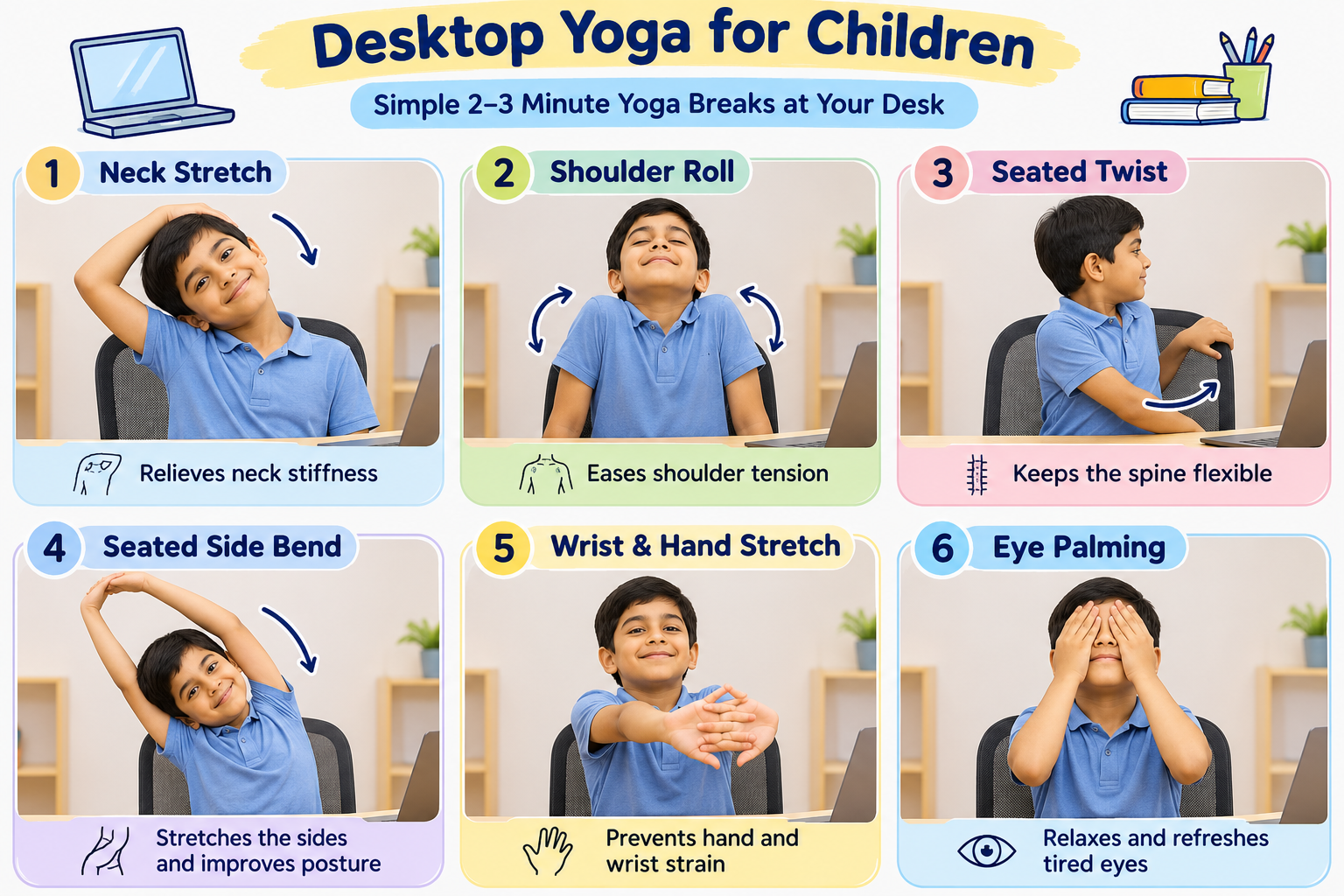
Stop the routine and tell an adult if a movement causes pain, numbness, pins and needles, or dizziness. Recurrent headaches, neck pain or blurred vision need a doctor's check.अगर किसी हरकत से दर्द, सुन्नपन, झनझनाहट या चक्कर आए तो दिनचर्या रोकें और किसी बड़े को बताएँ। बार-बार सिरदर्द, गर्दन का दर्द या धुँधला दिखना हो तो डॉक्टर को दिखाएँ।
4Play: how it keeps attention focusedखेल: यह ध्यान को कैसे केंद्रित रखता है
- Children and teenagers need at least 60 minutes of physical activity a day, according to WHO. Much of it can be play: running, cycling, skipping, football, badminton, dancing or swimming.WHO के अनुसार 5 से 17 साल के बच्चों को रोज़ कम से कम 60 मिनट शारीरिक गतिविधि चाहिए। इसमें से ज़्यादातर खेल हो सकता है: दौड़ना, साइकिल, रस्सी कूदना, फुटबॉल, बैडमिंटन, डांस या तैराकी।
- Active play improves mood, sleep and the ability to sit and concentrate afterwards. A child who has run around usually settles to study better than one who has been sitting all day.सक्रिय खेल से मूड, नींद और बाद में बैठकर ध्यान लगाने की क्षमता बेहतर होती है। जो बच्चा दौड़-भाग करके आया हो, वह अक्सर उस बच्चे से बेहतर पढ़ता है जो दिन भर बैठा रहा हो।
- Free play, where the child chooses the game, is also important. It builds problem-solving, patience and the ability to handle frustration, which help in exams too.अपनी मर्ज़ी का खेल, जिसे बच्चा ख़ुद चुने, वह भी ज़रूरी है। इससे समस्या सुलझाने, धैर्य और निराशा सँभालने की क्षमता बढ़ती है, जो परीक्षा में भी काम आती है।
Fitting play between school and coachingस्कूल और कोचिंग के बीच खेल कैसे रखें
- Use the gap after school for 20 to 30 minutes of play before the snack and homework. Even a walk to the coaching centre counts if it is brisk.स्कूल के बाद नाश्ते और होमवर्क से पहले 20 से 30 मिनट खेलने दें। कोचिंग तक तेज़ चलकर जाना भी गिना जा सकता है।
- Keep one slot on the weekly timetable marked "play". Do not replace it with extra classes on the same day.साप्ताहिक टाइमटेबल पर एक समय "खेल" लिखकर रखें। उसी दिन अतिरिक्त क्लास लगाकर उसे न हटाएँ।
- Weekends and holidays are good for a longer game, a cycle ride, or a visit to a park.छुट्टी और सप्ताहांत लंबे खेल, साइकिल चलाने या पार्क जाने के लिए अच्छे हैं।
5Family time: rest that rechargesपरिवार का समय: वह आराम जो ताज़गी दे
- Time with family is not a distraction from preparation. It lowers stress, and a child who feels loved and settled usually returns to study with more energy.परिवार के साथ समय तैयारी में रुकावट नहीं है। इससे तनाव कम होता है, और जो बच्चा ख़ुद को प्यारा और सुरक्षित महसूस करता है, वह अक्सर ज़्यादा ऊर्जा के साथ पढ़ाई में लौटता है।
- Eat at least one meal a day together, without phones on the table.रोज़ कम से कम एक वक़्त का खाना साथ खाएँ, मेज़ पर फ़ोन रखे बिना।
- Take a 20 to 30 minute family walk, or play a board game, cards or a quiz together, a few times a week.हफ़्ते में कुछ बार 20 से 30 मिनट की साथ में सैर करें, या बोर्ड गेम, ताश या क्विज़ खेलें।
- Plan one evening a week with no study talk. Talk about the child's day, interests and feelings instead of marks and rank.हफ़्ते में एक शाम पढ़ाई की बात के बिना रखें। नंबर और रैंक की जगह बच्चे के दिन, रुचि और भावनाओं की बात करें।
- Let the child tell you how the preparation is going. Listening is more helpful than repeated questions and reminders.बच्चे को बताने दें कि तैयारी कैसी चल रही है। बार-बार सवाल और याद दिलाने से ज़्यादा मदद सुनने से मिलती है।
6Revision that worksऐसा रिवीजन जो काम करे
Reading the same chapter again and again feels like studying, but it is not very effective for long-term memory. These methods work better:एक ही अध्याय बार-बार पढ़ना पढ़ाई जैसा लगता है, पर लंबी अवधि की याद के लिए यह बहुत असरदार नहीं है। ये तरीके बेहतर काम करते हैं:
1. Spaced revision1. अंतराल वाला रिवीजन
- Revise a topic the next day, after 3 to 4 days, and again after a week. Each review takes less time than the first study.किसी विषय को अगले दिन, 3 से 4 दिन बाद, और फिर एक हफ़्ते बाद दोहराएँ। हर बार पहली पढ़ाई से कम समय लगता है।
2. Active recall2. सक्रिय याद करना
- Close the book and write or say what was learned. Then check the book and fill the gaps. This is more useful than rereading.किताब बंद करके जो पढ़ा है वह लिखें या बोलकर बताएँ। फिर किताब खोलकर छूटी बातें भरें। यह दोबारा पढ़ने से ज़्यादा काम का है।
- Ask a parent or sibling to quiz the child with three questions on the topic.माता-पिता या भाई-बहन से उस विषय पर तीन सवाल पूछने को कहें।
3. Practice papers and mistake log3. अभ्यास-पेपर और ग़लतियों की सूची
- Solve previous-year or mock papers under timed conditions, once a week at first, then more often in the final month.पिछले साल या मॉक पेपर समय सीमा में हल करें। शुरू में हफ़्ते में एक बार, फिर आख़िरी महीने में ज़्यादा बार।
- Keep a "mistake notebook". Write each wrong answer, why it was wrong, and the correct method. Read this notebook before every mock test.एक "ग़लती की कॉपी" रखें। हर ग़लत उत्तर, ग़लती का कारण और सही तरीका लिखें। हर मॉक टेस्ट से पहले यह कॉपी पढ़ें।
4. Revision calendar4. रिवीजन कैलेंडर
- Mark each finished topic on a simple chart, with dates for the next two revisions. The chart shows what is due, so nothing is forgotten.पूरे हुए हर विषय को एक सरल चार्ट में लिखें, साथ में अगले दो रिवीजन की तारीख। चार्ट से पता रहता है कि कौन सा विषय दोबारा देखना है, ताकि कुछ छूटे नहीं।
7Note-taking that helps revisionऐसे नोट्स जो रिवीजन में काम आएँ
- Write notes in the student's own words. Copying the book word for word does not show understanding.नोट्स बच्चे अपने शब्दों में लिखें। किताब की बात हूबहू उतारने से समझ का पता नहीं चलता।
- Use headings, numbers and short lines. One idea per line makes revision faster.शीर्षक, नंबर और छोटी पंक्तियाँ इस्तेमाल करें। हर पंक्ति में एक बात हो, तो रिवीजन जल्दी होता है।
- Use a simple two-column layout. On the left, write the key question or term. On the right, write the answer or explanation. Cover the right side and test yourself.एक सरल दो-कॉलम लेआउट बनाएँ। बाएँ तरफ़ मुख्य सवाल या शब्द, दाएँ तरफ़ उत्तर या समझ। दाहिनी तरफ़ ढककर ख़ुद को परखें।
- Draw simple diagrams, flow charts and tables for processes, causes and comparisons. Visual notes are easier to remember than long paragraphs.प्रक्रिया, कारण और तुलना के लिए सरल चित्र, फ़्लो चार्ट और टेबल बनाएँ। लंबे पैराग्राफ़ से चित्र वाले नोट्स आसानी से याद रहते हैं।
- Review the notes within 24 hours of writing them. Add missing points and mark doubts with a question mark.नोट्स लिखने के 24 घंटे के अंदर उन्हें एक बार देखें। छूटी बातें जोड़ें और शक वाली बातों पर प्रश्न चिह्न लगाएँ।
- Keep one notebook per subject, or one folder for loose sheets. A clear system saves time in the final weeks.हर विषय की अलग कॉपी रखें, या ढीले पन्नों के लिए एक फ़ोल्डर। साफ़ व्यवस्था से आख़िरी हफ़्तों में समय बचता है।
- Write doubts on one page. Bring it to the teacher or coaching class, and ask them one by one.शक वाले सवाल एक पन्ने पर लिखें। उसे शिक्षक या कोचिंग क्लास में ले जाएँ और एक-एक करके पूछें।
- In the final week, use the notes as the main revision source. Long new notes at that stage add confusion.आख़िरी हफ़्ते में इन्हीं नोट्स से रिवीजन करें। उस समय नए लंबे नोट्स बनाने से उलझन बढ़ती है।
8Focus and the study spaceध्यान और पढ़ाई की जगह
- Study at the same desk, at roughly the same time each day. The brain starts to settle into study mode more quickly.रोज़ लगभग एक ही समय पर एक ही मेज़ पर पढ़ें। दिमाग़ जल्दी पढ़ाई के मूड में आता है।
- Keep the phone in another room during study blocks. Even a phone face-down on the desk pulls attention.पढ़ाई के ब्लॉक में फ़ोन दूसरे कमरे में रखें। मेज़ पर उल्टा रखा फ़ोन भी ध्यान खींचता है।
- Good light from the side or front, a comfortable chair, and water within reach.सामने या बगल से अच्छी रोशनी, आरामदायक कुर्सी और पास में पानी।
- Write one clear goal before each block, for example "solve 10 questions from chapter 4".हर ब्लॉक से पहले एक साफ़ लक्ष्य लिखें, जैसे "अध्याय 4 के 10 सवाल हल करना"।
- When the mind wanders, write the distracting thought on a side sheet ("call friend at 6") and go back to work. This clears the mind without losing the task.जब मन भटके, तो भटकाने वाली बात साइड की पर्ची पर लिखें ("6 बजे दोस्त को फ़ोन") और वापस पढ़ाई में लगें। इससे मन साफ़ होता है और काम नहीं छूटता।
- Praise effort, such as "you kept going for 40 minutes", more than the result.नतीजे से ज़्यादा मेहनत की तारीफ़ करें, जैसे "तुमने 40 मिनट तक काम जारी रखा"।
9Sleep, food and waterनींद, खाना और पानी
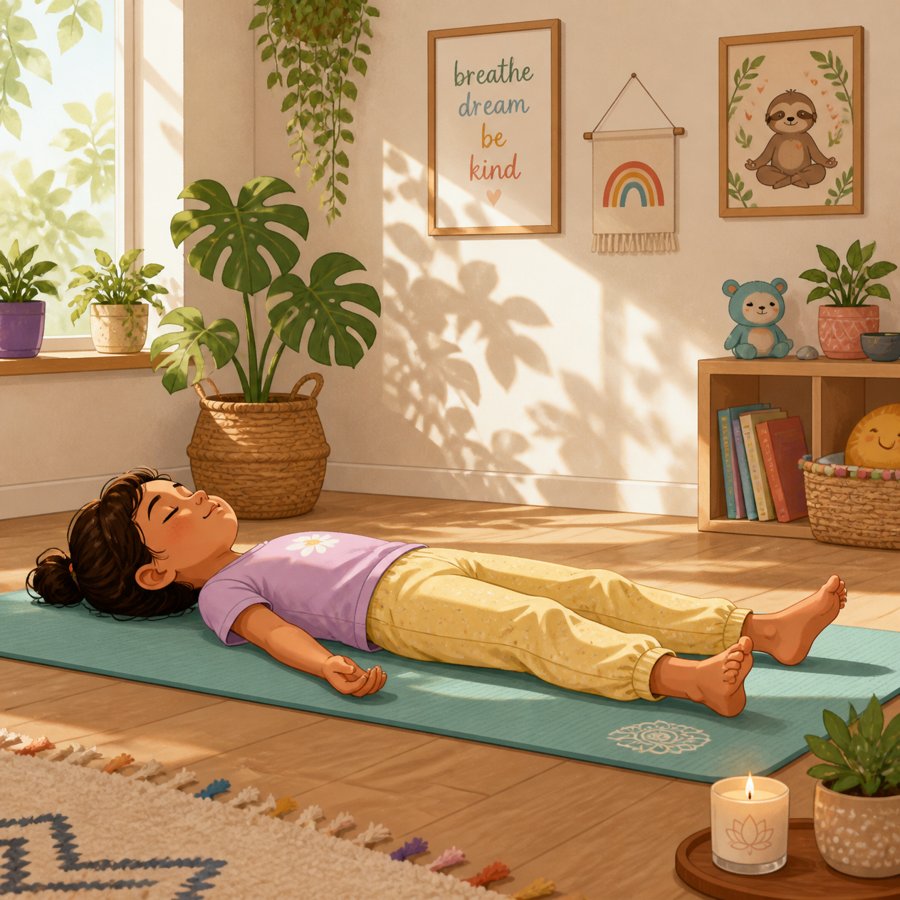
- Sleep is when memory is set. Children aged about 6 to 12 need around 9 to 12 hours a night, and teenagers aged 13 to 18 need around 8 to 10 hours (American Academy of Sleep Medicine and AAP guidance).नींद में ही याद पक्की होती है। लगभग 6 से 12 साल के बच्चों को रात में लगभग 9 से 12 घंटे, और 13 से 18 साल के किशोरों को लगभग 8 से 10 घंटे की नींद चाहिए (अमेरिकन एकेडमी ऑफ़ स्लीप मेडिसिन और AAP के दिशानिर्देश)।
- Keep a fixed bedtime and wake-up time, including on holidays if possible. Stop study and screens about an hour before bed.सोने और उठने का समय तय रखें, हो सके तो छुट्टी में भी। सोने से लगभग एक घंटा पहले पढ़ाई और स्क्रीन बंद करें।
- Do not stay up late to study. A child who sleeps well and revises earlier usually does better than one who studies until midnight.पढ़ने के लिए देर रात तक न जागें। जो बच्चा अच्छी नींद लेता है और पहले रिवीजन करता है, वह अक्सर आधी रात तक पढ़ने वाले से बेहतर करता है।
- Breakfast is important. Include a protein food such as eggs, paneer, dal, curd, milk or peanut butter, with a whole-grain item like poha, dalia or a roti.नाश्ता ज़रूरी है। अंडा, पनीर, दाल, दही, दूध या मूँगफली का मक्खन जैसी प्रोटीन वाली चीज़ के साथ पोहा, दलिया या रोटी जैसा अनाज लें।
- Drink water through the day. Keep a bottle on the desk, and sip it during breaks.दिन भर पानी पिएँ। मेज़ पर बोतल रखें और ब्रेक में थोड़ा-थोड़ा पिएँ।
- Limit sugary snacks and packaged drinks during study, as they bring quick highs and dips.पढ़ाई के समय मीठे स्नैक्स और पैकेट वाले पेय कम रखें, क्योंकि इनसे ऊर्जा तेज़ी से चढ़ती और गिरती है।
10Caffeine and energy drinksकैफ़ीन और एनर्जी ड्रिंक
Why caffeine works against studyकैफ़ीन पढ़ाई के ख़िलाफ़ क्यों जाता है
- Caffeine stays in the body for hours. A drink in the afternoon or evening reduces the quality of sleep, and sleep is when memory is set.कैफ़ीन शरीर में घंटों तक रहता है। दोपहर या शाम को लिया गया पेय नींद की गुणवत्ता घटाता है, और नींद में ही याद पक्की होती है।
- Too much caffeine can cause restlessness, a fast heartbeat, headache, stomach upset, irritability and anxiety. These can look like exam stress, which makes the problem harder to notice.ज़्यादा कैफ़ीन से बेचैनी, तेज़ धड़कन, सिरदर्द, पेट की गड़बड़ी, चिड़चिड़ापन और घबराहट हो सकती है। ये लक्षण परीक्षा के तनाव जैसे लगते हैं, इसलिए समस्या को पहचानना मुश्किल होता है।
- Caffeine does not replace sleep. A child who feels tired every day needs better sleep first.कैफ़ीन नींद की जगह नहीं ले सकता। जो बच्चा रोज़ थका महसूस करता है, उसे पहले बेहतर नींद चाहिए।
Everyday sources to keep in mindरोज़ की चीज़ें जिनमें कैफ़ीन होता है
- Cola and some other soft drinks, tea, coffee, and some chocolate and "energy" snacks. Parents often do not count these.कोला और कुछ दूसरे सॉफ़्ट ड्रिंक, चाय, कॉफ़ी, और कुछ चॉकलेट व "एनर्जी" स्नैक्स। माता-पिता अक्सर इन्हें गिनते ही नहीं।
What to do at homeघर पर क्या करें
- No energy drinks for children and teenagers. Keep them out of the house, and do not let them become a study habit.बच्चों और किशोरों को एनर्जी ड्रिंक नहीं। इन्हें घर में न रखें, और इन्हें पढ़ाई की आदत न बनने दें।
- Keep tea, coffee and cola occasional, in small amounts, and not after early afternoon.चाय, कॉफ़ी और कोला कभी-कभी, कम मात्रा में, और दोपहर के बाद नहीं।
- If a child already drinks energy drinks or large amounts of tea or cola every day, reduce them slowly over 1 to 2 weeks. Stopping suddenly can cause headache and tiredness.अगर बच्चा पहले से रोज़ एनर्जी ड्रिंक या ज़्यादा चाय-कोला लेता है, तो उसे 1 से 2 हफ़्ते में धीरे-धीरे कम करें। अचानक बंद करने से सिरदर्द और थकान हो सकती है।
- Let water, fruit and a proper meal be the "energy" for study.पानी, फल और ठीक से खाना ही पढ़ाई की "ऊर्जा" बनें।
11Exam stress and when to get helpपरीक्षा का तनाव और मदद कब लें
Some worry before exams is normal. It can even help a child prepare. But watch for signs that stress has become too much:परीक्षा से पहले थोड़ी चिंता होना सामान्य है। यह बच्चे को तैयारी के लिए प्रेरित भी कर सकती है। पर इन संकेतों पर ध्यान दें कि तनाव ज़्यादा हो गया है:
- Trouble sleeping most nights, or waking up very early with worryज़्यादातर रातों में नींद न आना, या चिंता से बहुत सुबह जाग जाना
- Frequent headaches or stomach aches before school, coaching or testsस्कूल, कोचिंग या टेस्ट से पहले बार-बार सिरदर्द या पेट दर्द
- Loss of appetite, weight loss, or eating much more than usualभूख कम लगना, वज़न घटना, या सामान्य से ज़्यादा खाना
- Sudden loss of interest in everything, including friends and playदोस्तों और खेल सहित हर चीज़ में अचानक रुचि ख़त्म होना
- Frequent crying, anger, or withdrawing from the familyबार-बार रोना, गुस्सा, या परिवार से दूर रहना
- Talk of not wanting to live, or of hurting themselvesजीने की इच्छा न होने, या ख़ुद को नुक़सान पहुँचाने की बात
For the other signs, book a visit with the child's doctor. Talking to the child calmly, without blame and without comparison with others, is the first step. A child who feels safe to say "I am scared" is easier to help.बाक़ी संकेतों के लिए बच्चे के डॉक्टर से मिलने का समय लें। बच्चे से शांति से बात करना, बिना दोष दिए और दूसरों से तुलना किए, पहला कदम है। जो बच्चा कह सके कि "मुझे डर लग रहा है", उसकी मदद करना आसान होता है।
Book an appointment →अपॉइंटमेंट बुक करें →12Printable weekly timetableप्रिंट करने लायक साप्ताहिक टाइमटेबल
Fill this in with your child. Keep the study blocks, breaks, play and family time all on the page. Print it and keep it at the study desk.बच्चे के साथ बैठकर इसे भरें। पढ़ाई के ब्लॉक, ब्रेक, खेल और परिवार का समय, सब इसी पन्ने पर रखें। प्रिंट करके पढ़ाई की मेज़ पर लगाएँ।
| Timeसमय | Mon सोम | Tue मंगल | Wed बुध | Thu गुरु | Fri शुक्र | Sat शनि | Sun रवि |
|---|---|---|---|---|---|---|---|
| Wake up, water, light breakfastउठना, पानी, हल्का नाश्ता | |||||||
| Schoolस्कूल | |||||||
| After school: snack and play (20–30 min)स्कूल के बाद: नाश्ता और खेल (20–30 मिनट) | |||||||
| Coaching or tuitionकोचिंग या ट्यूशन | |||||||
| Study block 1 (subject and goal)पढ़ाई ब्लॉक 1 (विषय और लक्ष्य) | |||||||
| Break: water, walk, desk yogaब्रेक: पानी, सैर, डेस्क योगा | |||||||
| Study block 2 (revision or practice)पढ़ाई ब्लॉक 2 (रिवीजन या अभ्यास) | |||||||
| Family meal, no phonesपरिवार के साथ खाना, बिना फ़ोन | |||||||
| Free play or outdoor activity (60 min a day)खुला खेल या बाहर की गतिविधि (रोज़ 60 मिनट) | |||||||
| Family time: walk, game or talkपरिवार का समय: सैर, खेल या बातचीत | |||||||
| Mistake notebook or notes review (10–15 min)ग़लती की कॉपी या नोट्स देखना (10–15 मिनट) | |||||||
| Dinner, no screensरात का खाना, बिना स्क्रीन | |||||||
| Screens off, wind down, bedtimeस्क्रीन बंद, आराम, सोने का समय |
Target: 9–12 hours of sleep for children aged 6–12, and 8–10 hours for teenagers aged 13–18. Keep one free slot each day.लक्ष्य: 6–12 साल के बच्चों के लिए 9–12 घंटे नींद, और 13–18 साल के किशोरों के लिए 8–10 घंटे। हर दिन एक खाली समय रखें।
13Summary checklistसारांश चेकलिस्ट
- A written plan for the weeks ahead, and a weekly timetable with play and family time in it.आने वाले हफ़्तों की लिखी योजना, और खेल व परिवार के समय वाला साप्ताहिक टाइमटेबल।
- Study in blocks of 30–40 minutes, with real breaks.30–40 मिनट के ब्लॉक में पढ़ाई, सच्चे ब्रेक के साथ।
- Desk yoga once or twice a day, and 60 minutes of physical activity.दिन में एक या दो बार डेस्क योगा, और 60 मिनट शारीरिक गतिविधि।
- Revision that is spaced and active, with practice papers and a mistake notebook.अंतराल वाला और सक्रिय रिवीजन, अभ्यास-पेपर और ग़लती की कॉपी के साथ।
- Short notes in the child's own words, reviewed within 24 hours.बच्चे के अपने शब्दों में छोटे नोट्स, 24 घंटे के अंदर दोहराए हुए।
- Phone out of the study space, and water on the desk.पढ़ाई की जगह से फ़ोन बाहर, और मेज़ पर पानी।
- Sleep at a fixed time, with 9–12 hours for younger children and 8–10 hours for teenagers.तय समय पर सोना, छोटे बच्चों के लिए 9–12 घंटे और किशोरों के लिए 8–10 घंटे।
- No energy drinks. Tea, coffee and cola kept occasional and early in the day.एनर्जी ड्रिंक नहीं। चाय, कॉफ़ी और कोला कभी-कभी, और दिन के शुरू में।
- Family meals and evenings, with time to talk about things other than marks.परिवार के साथ खाना और शामें, नंबरों के अलावा दूसरी बातों के लिए समय।
- Watch for signs of stress, and call a doctor if they last.तनाव के संकेतों पर नज़र रखें, और ये बने रहें तो डॉक्टर को दिखाएँ।
This information is for health education only. It describes general approaches that suit many children and teenagers, but every child is different, and your child may need something that is not covered here. Written advice can also be understood in a way we did not intend. If you are worried about your child's health, sleep, mood or school performance, please see a doctor without delay. This page does not replace a consultation or examination by a doctor. Sources: American Academy of Sleep Medicine and AAP guidance on sleep, WHO guidance on physical activity for children and young people, and American Academy of Pediatrics guidance on energy drinks.यह जानकारी सिर्फ़ स्वास्थ्य शिक्षा के लिए है। इसमें वे आम तरीके बताए गए हैं जो कई बच्चों और किशोरों के लिए ठीक रहते हैं, पर हर बच्चा अलग होता है, और आपके बच्चे को ऐसी कोई ज़रूरत हो सकती है जो यहाँ नहीं लिखी है। लिखी हुई बात का मतलब कभी-कभी हमारी कही बात से अलग भी समझा जा सकता है। अगर बच्चे की सेहत, नींद, मूड या स्कूल के प्रदर्शन को लेकर चिंता हो, तो बिना देर किए डॉक्टर को दिखाएँ। यह पेज डॉक्टर से परामर्श या जाँच की जगह नहीं ले सकता। स्रोत: नींद पर अमेरिकन एकेडमी ऑफ़ स्लीप मेडिसिन और AAP के दिशानिर्देश, बच्चों की शारीरिक गतिविधि पर WHO के दिशानिर्देश, और एनर्जी ड्रिंक पर अमेरिकन एकेडमी ऑफ़ पीडियाट्रिक्स के दिशानिर्देश।