
Eye discharge in newborns: blocked tear duct, and when to see the doctorनवजात की आंखों से पानी या चिपचिपा स्राव: टियर डक्ट बंद होना, और डॉक्टर को कब दिखाएं
Many new parents notice a watery eye or sticky discharge in the first weeks. In many babies, the cause is a blocked tear duct. It is common and often improves over time, but it should not be assumed to be harmless. A doctor can confirm the cause, rule out infection, and advise on follow-up. Please do not treat the eye at home without the doctor's advice.नए माता-पिता अक्सर पहले कुछ हफ्तों में आंख में पानी या चिपचिपा स्राव देखते हैं। कई बच्चों में इसका कारण टियर डक्ट (आंसू की नली) का बंद होना होता है। यह आम है और समय के साथ अक्सर सुधर जाता है, लेकिन इसे हल्के में नहीं लेना चाहिए। डॉक्टर कारण पक्का कर सकते हैं, इन्फेक्शन की जांच कर सकते हैं, और आगे की देखभाल की सलाह दे सकते हैं। डॉक्टर की सलाह के बिना आंख का घरेलू इलाज न करें।
1What is a blocked tear duct?टियर डक्ट बंद होना क्या है?
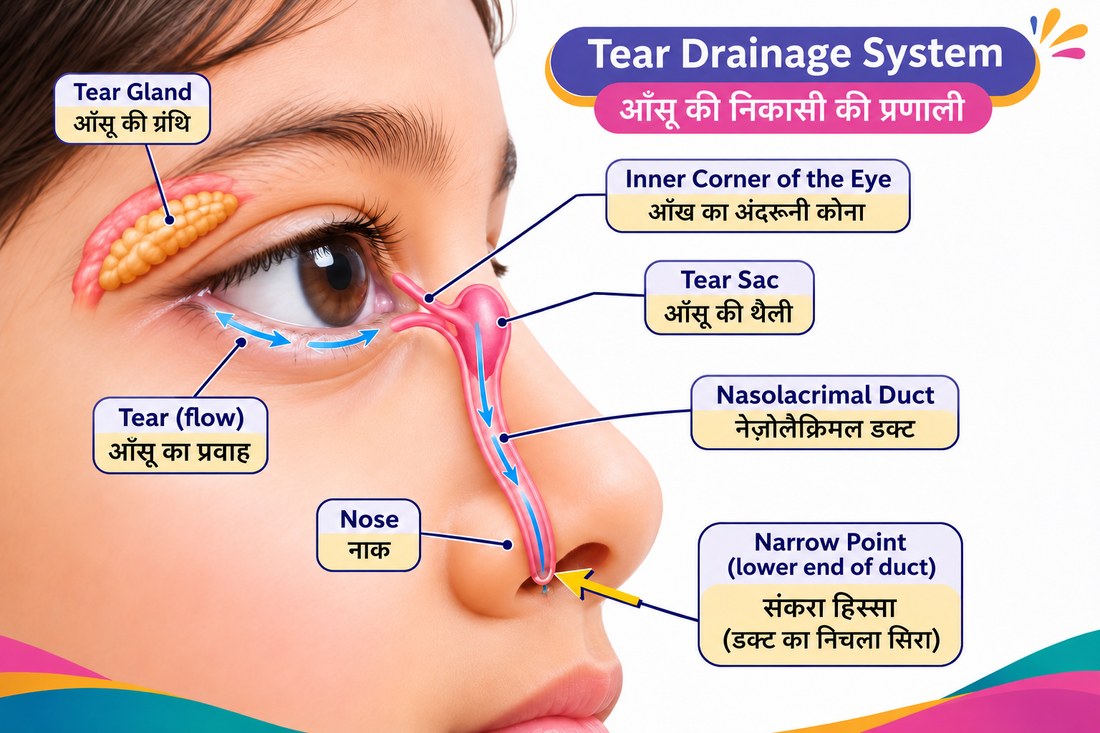
Tears drain from the inner corner of the eye through a thin tube, called the nasolacrimal duct, into the nose. In some newborns, the lower end of this tube is still closed by a thin membrane, or the tube is narrow. Tears cannot drain well, so they collect at the inner corner of the eye. This causes watering, and mucus can build up and form sticky discharge.
The eye may look wet most of the time, and it is often only one eye. The discharge is usually clear or white to yellow-white. It can start around 2 weeks of age, and it can come and go.
आंसू आंख के अंदरूनी कोने से एक पतली नली के ज़रिए नाक में जाते हैं। इस नली को नेज़ोलैक्रिमल डक्ट कहते हैं। कुछ नवजात में इस नली का निचला सिरा एक पतली झिल्ली से बंद होता है, या नली संकरी होती है। आंसू ठीक से नहीं निकल पाते, इसलिए आंख के अंदरूनी कोने में जमा होते हैं। इससे आंख में पानी आता है, और बलगम जमकर चिपचिपा स्राव बन सकता है।
आंख ज़्यादातर समय गीली दिख सकती है, और अक्सर एक ही आंख में होती है। स्राव आम तौर पर साफ़ या सफ़ेद से पीला-सफ़ेद होता है। यह लगभग 2 हफ्ते की उम्र में शुरू हो सकता है, और आता-जाता रह सकता है।
2Watering that is common, and signs that need attentionआम पानी और वे संकेत जिन पर ध्यान देना ज़रूरी है
Common in a blocked tear duct
- Watering or a little mucus in one or both eyes, especially when the baby is crying or feeding.
- Clear or white-yellow mucus at the inner corner of the eye, which can be wiped away.
- The eye is not red, the lids are not swollen, and the baby is otherwise well, feeding and gaining weight.
Signs that need prompt review
- Redness of the white of the eye, or thick yellow-green pus.
- Swelling near the inner corner of the eye or the nose.
- Watering with the eye sensitive to light, or a cloudy or enlarged eye.
- A baby who seems unwell, feeds poorly, or has a fever.
If any of the second list appears, please see a doctor without waiting for the next routine visit. The warning signs are listed again at the end of this article.
बंद टियर डक्ट में आम तौर पर दिखने वाली बातें
- एक या दोनों आंखों में पानी या थोड़ा बलगम, खासकर रोते समय या दूध पीते समय।
- आंख के अंदरूनी कोने पर साफ़ या सफ़ेद-पीला बलगम, जो पोंछने पर हट जाए।
- आंख लाल नहीं है, पलकें सूजी नहीं हैं, और बच्चा बाकी तरह से ठीक है, दूध पी रहा है और वज़न बढ़ रहा है।
जिन संकेतों पर जल्दी ध्यान देना ज़रूरी है
- आंख के सफ़ेद हिस्से में लालिमा, या गाढ़ा पीला-हरा मवाद।
- आंख के अंदरूनी कोने या नाक के पास सूजन।
- पानी के साथ रोशनी से आंख में परेशानी, या आंख धुंधली या बड़ी लगना।
- बच्चा बीमार लगे, दूध कम पिए, या बुखार हो।
दूसरी सूची का कोई भी संकेत दिखे, तो अगली नियमित जांच का इंतज़ार न करें, डॉक्टर को तुरंत दिखाएं। चेतावनी संकेत इस गाइड के अंत में फिर से लिखे गए हैं।
3What the doctor checks at the visitजांच में डॉक्टर क्या देखते हैं
A visit usually starts with a few questions and a careful look at both eyes. The doctor may check the eyelids, the inner corner of the eye, and the white and clear parts of the eye. Pressing gently on the area beside the nose may help the doctor see whether the duct is blocked, and whether there is swelling or pus. The doctor may also check the baby's eye movements and light response, and decide whether any other test is needed.
Please tell the doctor when the watering started, which eye is affected, what the discharge looks like, whether the baby has had a fever, and how feeding and sleep have been.
जांच आम तौर पर कुछ सवालों और दोनों आंखों की ध्यान से जांच से शुरू होती है। डॉक्टर पलकें, आंख का अंदरूनी कोना, और आंख के सफ़ेद व साफ़ हिस्से देख सकते हैं। नाक के पास हल्का दबाव देकर डॉक्टर यह देख सकते हैं कि नली बंद है या नहीं, और कहीं सूजन या मवाद तो नहीं। डॉक्टर आंखों की गति और रोशनी पर प्रतिक्रिया भी देख सकते हैं, और तय कर सकते हैं कि कोई और जांच चाहिए या नहीं।
डॉक्टर को बताएं कि पानी कब से है, कौन-सी आंख प्रभावित है, स्राव कैसा दिखता है, बच्चे को बुखार हुआ या नहीं, और दूध पीने और नींद कैसी है।
4Possible next steps (the doctor decides)आगे के संभावित कदम (फैसला डॉक्टर करेंगे)
The right plan depends on the baby's age, the eye examination, and whether there is infection. Options that doctors may discuss include:
- Watching and review: regular follow-up visits to see whether the watering is settling.
- Massage shown by the doctor: only if the doctor advises it, and shown to the parent during the visit.
- Medicine for infection: eye drops, only if the doctor finds an infection and prescribes them.
- Referral to an eye specialist: for watering or discharge that continues beyond about 12 months, or sooner if the doctor is concerned. The specialist may discuss a simple procedure to open the duct, usually under anaesthesia.
Massage at home, only if your doctor advises it. If your doctor advises massage and shows you how at the visit, you can do it at home. Do not start it without that advice.
- Wash your hands and keep your nails short. Hold your baby comfortably.
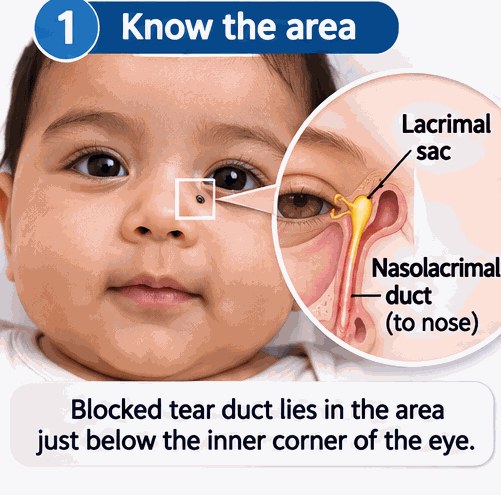
- Place the index finger on the tear sac, just below the inner corner of the eye, beside the nose. Not on the eyeball, and not on the bone of the nose.
- Press firmly but gently for 2 to 3 seconds, then slide downward towards the nose.
- Repeat 5 to 10 strokes per session, 2 to 4 times daily, or as your doctor tells you otherwise.
Do not massage while the eye is red, swollen, or has pus. Take your baby to the doctor first. Stop and see the doctor if the eye becomes red or swollen, there is pus, your baby cries in pain, or the eye looks cloudy.
सही योजना बच्चे की उम्र, आंख की जांच, और इन्फेक्शन है या नहीं, इस पर निर्भर करती है। डॉक्टर इन विकल्पों पर चर्चा कर सकते हैं:
- देखभाल और फॉलो-अप: नियमित जांच, यह देखने के लिए कि पानी कम हो रहा है या नहीं।
- डॉक्टर द्वारा सिखाई गई मालिश: केवल तब, जब डॉक्टर सलाह दें, और जांच के समय माता-पिता को सिखाई जाए।
- इन्फेक्शन की दवा: आंख की ड्रॉप या दवा, केवल तब जब डॉक्टर इन्फेक्शन पाएं और लिखें।
- आंखों के विशेषज्ञ के पास भेजना: पानी या स्राव लगभग 12 महीने के बाद भी रहे, या डॉक्टर को चिंता हो तो पहले। विशेषज्ञ नली खोलने की एक सरल प्रक्रिया पर चर्चा कर सकते हैं, जो आम तौर पर एनेस्थीसिया देकर की जाती है।
घर पर मालिश, केवल तब जब डॉक्टर सलाह दें। अगर डॉक्टर मालिश की सलाह दें और जांच के समय खुद दिखाएं, तो इसे घर पर किया जा सकता है। डॉक्टर की सलाह के बिना शुरू न करें।
- शुरू करने से पहले हाथ धोएं, नाखून छोटे रखें, और बच्चे को आराम से पकड़ें।
- तर्जनी उंगली आंसू की थैली पर रखें, आंख के अंदरूनी कोने के ठीक नीचे, नाक के पास। आंख के गोले पर नहीं, और नाक की हड्डी पर नहीं।
- 2 से 3 सेकंड तक हल्का-पक्का दबाव दें, फिर नाक की ओर नीचे सरकाएं।
- दिन में 2 से 4 बार, हर बार 5 से 10 बार दोहराएं, या जैसा डॉक्टर अलग कहें वैसा करें।
आंख लाल, सूजी हुई हो या उसमें मवाद हो, तो मालिश न करें। पहले बच्चे को डॉक्टर को दिखाएं। डॉक्टर को तुरंत दिखाएं अगर आंख लाल या सूजी हो, मवाद हो, बच्चा दर्द से रोए, या आंख धुंधली लगे।
5What to expect over the first yearपहले साल में क्या उम्मीद करें
- First weeks to months: watering or discharge may come and go. Keep the visit schedule your doctor gives you.
- Around 6 months: many parents notice improvement, but this varies. Continue the follow-up the doctor has planned.
- Around 12 months: the doctor reviews the eye again. If watering or discharge still continues, a referral to an eye specialist may be advised.
Every baby follows a different path, so these are only general markers, not promises.
- पहले हफ्ते से महीनों तक: पानी या स्राव आ-जा सकता है। डॉक्टर द्वारा दिया गया जांच का कार्यक्रम रखें।
- लगभग 6 महीने: कई माता-पिता को सुधार दिखता है, पर यह अलग-अलग होता है। डॉक्टर की बनाई फॉलो-अप योजना जारी रखें।
- लगभग 12 महीने: डॉक्टर आंख की फिर से जांच करते हैं। पानी या स्राव अब भी रहे, तो आंखों के विशेषज्ञ के पास भेजने की सलाह दी जा सकती है।
हर बच्चे का सफ़र अलग होता है, इसलिए ये केवल सामान्य पड़ाव हैं, कोई वादा नहीं।
6What parents should do nowमाता-पिता अभी क्या करें
- Book a visit with the doctor if the eye is watering or has discharge, or if you are unsure.
- Do not put drops, ointment or home remedies in the eye unless the doctor has prescribed them. This includes breast milk, herbal drops and any other home remedy.
- Massage only if your doctor has advised it and shown you how. See the steps in section 4.
- Wash your hands before you touch your baby's face.
- Note the details to tell the doctor: when it started, which eye, the colour of the discharge, and any fever or feeding problems.
- आंख में पानी या स्राव हो, या आप पक्का न हों, तो डॉक्टर से अपॉइंटमेंट लें।
- डॉक्टर के लिखे बिना आंख में कोई ड्रॉप, मरहम या घरेलू उपाय न डालें। इसमें मां का दूध, हर्बल ड्रॉप या कोई और घरेलू चीज़ भी शामिल है।
- मालिश केवल तब करें जब डॉक्टर ने सलाह दी हो और तरीका दिखाया हो। तरीका चौथे भाग में है।
- बच्चे का चेहरा छूने से पहले अपने हाथ धोएं।
- डॉक्टर को बताने के लिए ये बातें नोट करें: स्राव कब शुरू हुआ, कौन-सी आंख, स्राव का रंग, और बुखार या दूध पीने में दिक्कत।
7Common mythsआम भ्रांतियां
- "Something the mother did caused it." A blocked tear duct is a development matter in the baby. It is not caused by anything the parents did or ate.
- "Watering means the baby is crying too much." Watering from a blocked duct is a drainage problem. Crying can make it look worse, but it is not the cause.
- "Home drops or breast milk will clear it." Home remedies are not a treatment. Please do not put anything in the eye without the doctor's advice.
- "If it is not red, nothing needs checking." Redness is one warning sign, but other signs can appear without redness. A check-up is the only way to be sure.
- "मां ने कुछ किया, इसलिए हुआ।" बंद टियर डक्ट बच्चे के विकास से जुड़ी बात है। यह माता-पिता के किसी काम या खान-पान से नहीं होता।
- "पानी आने का मतलब है बच्चा ज़्यादा रो रहा है।" बंद नली से पानी आना निकासी की समस्या है। रोने से यह ज़्यादा दिख सकता है, पर कारण रोना नहीं है।
- "घरेलू ड्रॉप या मां का दूध ठीक कर देगा।" घरेलू उपाय इलाज नहीं हैं। डॉक्टर की सलाह के बिना आंख में कुछ न डालें।
- "लाल नहीं है तो जांच की ज़रूरत नहीं।" लालिमा एक चेतावनी संकेत है, पर दूसरे संकेत बिना लालिमा के भी आ सकते हैं। पक्का करने का तरीका जांच ही है।
8Questions you may want to ask at the visitजांच के समय आप ये सवाल पूछ सकते हैं
- What do you think is causing the watering or discharge?
- Is there any sign of infection today?
- What is the plan for the next 3 to 6 months, and when should we come back?
- Should we do anything at home, and if so, can you show me how?
- What signs should make us come in sooner?
- आपके हिसाब से पानी या स्राव का कारण क्या है?
- आज कोई इन्फेक्शन के संकेत हैं क्या?
- अगले 3 से 6 महीने की योजना क्या है, और हमें कब वापस आना चाहिए?
- क्या घर पर कुछ करना है? अगर हां, तो क्या आप मुझे दिखा सकते हैं?
- किन संकेतों पर हमें जल्दी आना चाहिए?
9Common questions from parentsमाता-पिता के आम सवाल
Is the discharge an infection?
It can be, so the doctor should check. A blocked tear duct usually causes watering and mucus. Infection can cause redness, swelling or pus.
Will it affect my baby's eyesight?
A blocked tear duct usually does not harm the eye itself. A red, swollen or cloudy eye needs urgent medical attention.
Does my baby need massage?
If your doctor advises it and shows you at the visit, you can do it at home. Do not start it without that advice.
Can I wait and see?
Some babies are followed with regular visits rather than treated straight away. This is a decision for the doctor, based on the examination. Please do not decide to wait without a visit if the eye is red, swollen, or has pus.
क्या यह स्राव इन्फेक्शन है?
हो सकता है, इसलिए डॉक्टर को जांच करनी चाहिए। बंद टियर डक्ट में आम तौर पर पानी और बलगम आता है। इन्फेक्शन में लालिमा, सूजन या मवाद हो सकता है।
क्या इससे बच्चे की नज़र पर असर होगा?
बंद टियर डक्ट आम तौर पर आंख को नुकसान नहीं पहुंचाता। लाल, सूजी हुई या धुंधली आंख को तुरंत चिकित्सा देखभाल चाहिए।
क्या बच्चे को मालिश चाहिए?
अगर डॉक्टर सलाह दें और जांच के समय खुद दिखाएं, तो घर पर किया जा सकता है। डॉक्टर की सलाह के बिना शुरू न करें।
क्या बस इंतज़ार करें?
कुछ बच्चों को तुरंत इलाज के बजाय नियमित जांच के साथ देखा जाता है। यह फैसला जांच के आधार पर डॉक्टर करते हैं। अगर आंख लाल, सूजी हुई या उसमें मवाद है, तो बिना जांच के इंतज़ार न करें।
Seek urgent medical attention
- A red, swollen or painful lump beside the nose or at the inner corner of the eye.
- Swelling of the eyelids, or redness of the eye with fever. Fever means 99.5 °F or more.
- Thick pus or yellow-green discharge from one or both eyes, with the eyes stuck shut, especially in the first month.
- The eye looks cloudy, grey or bluish, is bigger than the other eye, or the baby squeezes it shut in light.
तुरंत डॉक्टर को दिखाएं
- नाक के पास या आंख के अंदरूनी कोने पर लाल, सूजी हुई या दर्द वाली गांठ।
- पलकों में सूजन, या बुखार के साथ आंख लाल होना। बुखार का मतलब 99.5 °F या उससे ज़्यादा।
- एक या दोनों आंखों से गाढ़ा मवाद या पीला-हरा स्राव, और आंखें चिपक जाना, खासकर पहले महीने में।
- आंख धुंधली, भूरी या नीली-सी दिखे, दूसरी आंख से बड़ी लगे, या रोशनी में बच्चा आंख बंद कर ले।
10Also see the doctor ifइन स्थितियों में भी डॉक्टर को दिखाएं
- The discharge is heavy, or the skin around the eye becomes sore, red or cracked.
- The watering or discharge is still present at 12 months of age.
- You are unsure whether the eye is improving.
- स्राव ज़्यादा है, या आंख के आसपास की त्वचा में जलन, लालिमा या दरारें हैं।
- 12 महीने की उम्र पर भी पानी या स्राव बना रहता है।
- आप तय नहीं कर पा रहे कि आंख ठीक हो रही है या नहीं।
Worried about your baby's eyes?
Dr. Dinesh Mittal sees newborns and infants at the Rohini clinic.
बच्चे की आंखों को लेकर चिंता है?
डॉ. दिनेश मित्तल रोहिणी क्लिनिक में नवजात और शिशुओं को देखते हैं।